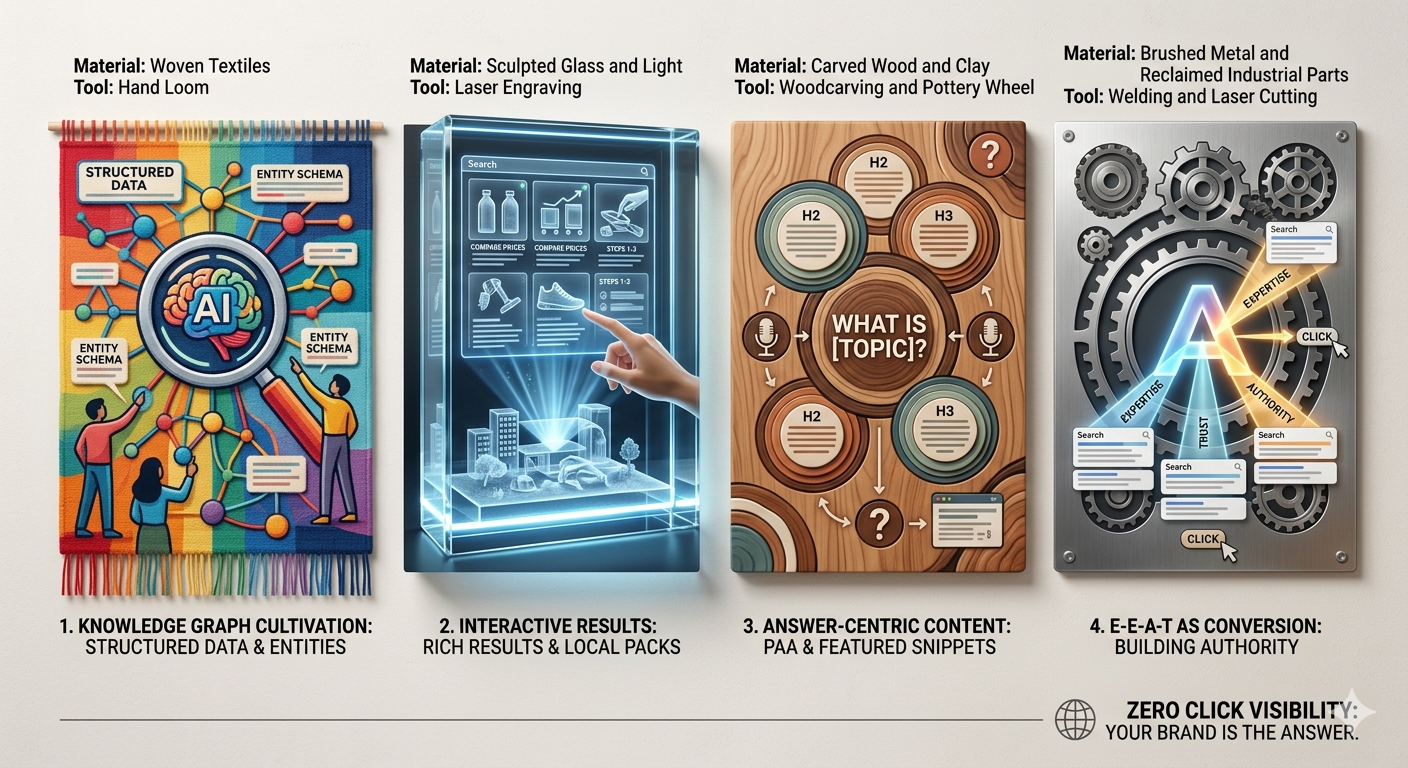
- Understanding Zero Click Searches and Modern SEO Shift
- Zero Click SEO Strategies and Google Visibility Techniques
- Introduction to Zero Click SEO Strategy
- Featured Snippet Optimization Strategy
- Featured Snippet Optimization Table
- Schema Markup and Structured Data Importance
- Why Schema Improves Zero Click Visibility
- Content Structuring for Zero Click SEO
- Content Structure Optimization Table
- People Also Ask Optimization Strategy
- AI Generated Search Results and Visibility
- Zero Click SEO Strategy Comparison Table
- ROI Future Trends Strategy Framework and Final Verdict
- Introduction to the Business Reality of Zero Click SEO
- ROI of Zero Click SEO Strategies
- Business Impact of Zero Click Searches
- Future Trends of Zero Click SEO 2026 to 2030
- Common Mistakes in Zero Click SEO
- Strategic Framework for Zero Click SEO Success
- How to Measure Success in Zero Click SEO
- Business Value of Zero Click SEO
- Final Verdict
- Author Information
Understanding Zero Click Searches and Modern SEO Shift
Introduction Why SEO Is Changing in 2026
In 2026, search engine optimization is no longer focused only on getting website clicks. The digital landscape has evolved, and Google now provides answers directly on the search results page. This means users often get the information they need without clicking any website.
This new behavior is called zero click search, and it is transforming how businesses approach SEO. Instead of focusing only on traffic, brands now need to focus on visibility within Google itself.
For businesses in Australia, Ireland, and other competitive digital markets, this shift is extremely important. If a brand is not visible in featured snippets, knowledge panels, or AI generated answers, it risks losing attention even if it ranks on page one.
Understanding zero click SEO is now essential for maintaining digital presence and brand authority.
What Is Zero Click Search in Simple Terms
A zero click search happens when a user types a query into Google and gets the answer directly on the search results page without clicking any website.
For example, if someone searches for the weather, currency conversion, or a quick definition, Google shows the answer instantly at the top.
This reduces the need for users to visit external websites.
Zero click searches usually appear in the form of:
Featured snippets
Knowledge panels
People also ask boxes
AI generated summaries
Local map results
These elements are designed to provide instant answers and improve user experience.
Why Zero Click Searches Are Increasing in 2026
The rise of zero click searches is driven by changes in user behavior and search engine technology.
One major reason is convenience. Users prefer quick answers without opening multiple websites.
Another reason is AI integration in search engines. Google now uses advanced AI systems to summarize information directly on the results page.
Mobile usage also plays a big role. On mobile devices, users want faster and simpler answers due to limited screen space and time.
Finally, search engines are focusing more on user experience rather than just traffic distribution.
Types of Zero Click Search Results
Zero click results appear in different formats depending on the type of query.
Featured Snippets
These are highlighted answer boxes that appear at the top of search results. They usually show a short explanation or step by step answer.
Knowledge Panels
These appear on the right side of desktop results and provide structured information about people, companies, or topics.
People Also Ask Boxes
These show related questions that users frequently search for, along with expandable answers.
Local Packs
These show map based results for nearby businesses, including contact details and reviews.
AI Generated Answers
In 2026, AI based summaries are becoming more common, where Google provides a full explanation directly on the search page.
Zero Click Search Formats Overview Table
| Format Type | Purpose | Visibility Level | SEO Importance |
|---|---|---|---|
| Featured Snippet | Direct answer | Very high | Critical |
| Knowledge Panel | Entity information | High | High |
| People Also Ask | Related questions | Medium to high | High |
| Local Pack | Local business results | High | Critical for local SEO |
| AI Summary | Automated explanation | Very high | Emerging critical |
How Zero Click Search Impacts SEO Strategy
Traditional SEO focused on getting users to click on websites. However, in 2026, the goal has shifted toward visibility and authority within search results.
Even if users do not click, appearing in featured snippets or AI summaries builds brand awareness and trust.
This means businesses must optimize content not just for rankings but also for direct answer placement.
For example, being featured in a snippet can position a brand as an authority in its industry even without website visits.
Why Businesses in Australia Must Adapt
In Australia, competition in digital marketing is increasing rapidly. Businesses that rely only on traditional traffic based SEO are starting to lose visibility.
Zero click search optimization allows businesses to remain visible even when users do not click through to their website.
This is especially important for service based industries, eCommerce platforms, and local businesses that depend on brand recognition.
Companies that adapt early to this strategy will have a strong competitive advantage in search visibility.
Zero click search is changing the purpose of SEO from driving traffic to building visibility. Businesses must now optimize for search result placement, not just website clicks.
Understanding how Google displays information is the first step in building a strong zero click SEO strategy.
Zero Click SEO Strategies and Google Visibility Techniques
Introduction to Zero Click SEO Strategy
In 2026, SEO is no longer only about driving traffic to websites. A large portion of search activity now ends directly on Google’s results page. This means users often get answers from featured snippets, AI summaries, knowledge panels, and other instant result formats without visiting any website.
Because of this shift, businesses must now optimize for visibility inside search results rather than relying only on clicks. The goal is to appear where users are already looking, even if they do not visit the website.
This part explains practical strategies that help websites stay visible in zero click search environments.
Featured Snippet Optimization Strategy
Featured snippets are one of the most powerful positions in Google search results. They appear at the top of the page and provide a direct answer to user queries.
To increase chances of appearing in featured snippets, content must be structured clearly and answer focused.
Key Optimization Methods
- Write direct answers in the first paragraph of a section
- Use short and clear sentences
- Structure content using question based headings
- Include definitions and step by step explanations
- Use bullet points for clarity
Featured Snippet Optimization Table
| Strategy | Purpose | Effect on Visibility |
|---|---|---|
| Direct answers | Quick information delivery | High |
| Question based headings | Match search intent | High |
| Bullet points | Easy readability | Medium to high |
| Simple language | Better comprehension | High |
| Structured paragraphs | Snippet eligibility | Very high |
Schema Markup and Structured Data Importance
Schema markup plays a critical role in zero click SEO because it helps search engines understand website content more clearly.
It allows Google to display rich results such as FAQs, ratings, business details, and product information directly in search results.
In 2026, websites without structured data are at a disadvantage because search engines rely heavily on machine readable formats to generate instant answers.
Common Types of Schema Used
- FAQ schema
- Article schema
- Organization schema
- Local business schema
- Product schema
Why Schema Improves Zero Click Visibility
Schema helps search engines categorize content more accurately. When content is properly structured, it becomes easier for Google to extract and display it in featured results.
This increases brand exposure even if users do not click on the website.
For businesses in competitive markets like Australia and Ireland, schema optimization is now a core SEO requirement.
Content Structuring for Zero Click SEO
Content structure is one of the most important factors in zero click optimization. Search engines prefer content that is easy to scan and extract.
Well structured content increases the chances of appearing in featured snippets and AI generated answers.
Best Structuring Practices
- Use clear headings and subheadings
- Break content into small sections
- Use numbered lists for processes
- Provide concise explanations before detailed expansion
- Keep paragraphs focused on one idea
Content Structure Optimization Table
| Element | Function | SEO Benefit |
|---|---|---|
| Headings | Organize topics | High |
| Short paragraphs | Improve readability | High |
| Lists | Highlight key points | Medium to high |
| Definitions | Snippet eligibility | Very high |
| Structured flow | Better indexing | High |
People Also Ask Optimization Strategy
The People Also Ask section is a major source of zero click visibility. It shows related questions that users frequently search and expands answers directly in search results.
To optimize for this feature, content should include question based subheadings and simple explanations.
Optimization Techniques
- Use question style headings such as what, why, how
- Provide short answers followed by detailed explanations
- Cover related subtopics in the same section
- Include natural language phrasing
AI Generated Search Results and Visibility
In 2026, AI powered search summaries are becoming more common. These summaries combine information from multiple sources and present a single answer on the search page.
To appear in these results, content must be:
- Highly structured
- Factually clear
- Easy to summarize
- Authoritative and consistent
Search engines prefer content that is simple to interpret and reliable.
Zero Click SEO Strategy Comparison Table
| Strategy | Difficulty Level | Impact | Priority |
|---|---|---|---|
| Featured snippet optimization | Medium | Very high | Critical |
| Schema markup | Medium | High | High |
| Content structuring | Easy | High | Critical |
| PAA optimization | Easy | Medium to high | High |
| AI summary targeting | Advanced | Very high | Emerging priority |
Zero click SEO is built around structure, clarity, and search engine understanding. Instead of focusing only on traffic, businesses must focus on how their content appears inside search results.
Proper optimization increases brand visibility even when users do not click through to the website
ROI Future Trends Strategy Framework and Final Verdict
Introduction to the Business Reality of Zero Click SEO
In 2026, SEO is no longer only about getting website traffic. A large portion of search activity now ends directly on Google’s results page through featured snippets, AI summaries, knowledge panels, and instant answers.
This shift has changed how businesses measure success. Visibility has become just as important as clicks. In many cases, appearing in search results without receiving a click is still valuable because it builds brand awareness and authority.
For businesses in competitive markets such as Australia, Ireland, and the United States, adapting to zero click SEO is now essential for maintaining digital presence.
ROI of Zero Click SEO Strategies
The return on investment from zero click SEO is different from traditional SEO. Instead of focusing only on website visits, the value comes from increased visibility, brand recognition, and trust building.
Even if users do not click on a website, seeing a brand repeatedly in featured snippets or AI answers increases familiarity. This often leads to indirect conversions later when users search again or visit the brand directly.
Zero click SEO also reduces dependency on paid advertising. When a brand consistently appears in top search features, it gains organic exposure without ongoing ad spend.
| Benefit Area | Business Impact | ROI Outcome |
|---|---|---|
| Brand visibility | Higher recognition | Long term growth |
| Featured snippets | Authority positioning | Increased trust |
| AI search inclusion | Constant exposure | Organic impressions |
| Reduced ad reliance | Lower marketing cost | Better profit margins |
Business Impact of Zero Click Searches
Zero click searches have significantly changed how businesses interact with search engines. Instead of competing only for clicks, businesses now compete for visibility within search features.
This has made search engine presence more important than website visits alone. A brand that appears frequently in snippets or AI summaries is perceived as more authoritative, even if users do not click immediately.
For service based businesses, this visibility builds trust before users even visit the website. For eCommerce and SaaS companies, it increases brand recall and improves conversion rates over time.
In Australia, where digital competition is strong, this visibility advantage can be a key differentiator between market leaders and smaller competitors.
Future Trends of Zero Click SEO 2026 to 2030
Zero click SEO will continue to evolve as search engines become more AI driven and user focused. Several important trends are already shaping the future.
One major trend is full AI search integration. Search engines will increasingly provide complete answers using AI models, reducing the need for users to click on websites.
Another trend is conversational search. Users will interact with search engines in a more natural language format, similar to chat based systems, rather than traditional keyword searches.
Personalized search results are also expected to increase. Search engines will display different answers based on user behavior, location, and preferences.
Voice search will continue to grow, especially on mobile devices and smart assistants. This will increase demand for concise and structured content that can be easily read aloud.
| Future Trend | Description | SEO Impact |
|---|---|---|
| AI search answers | Full result summaries | High |
| Conversational search | Chat style queries | High |
| Personalized results | User based content | Very high |
| Voice search growth | Spoken queries | Medium to high |
Common Mistakes in Zero Click SEO
Many businesses struggle with zero click SEO because they continue to focus only on traditional ranking strategies.
One common mistake is ignoring structured content. Without proper formatting, search engines cannot easily extract information for snippets or AI summaries.
Another mistake is writing long unstructured paragraphs that are difficult to interpret quickly. This reduces chances of being selected for featured results.
Some businesses also ignore question based content, which is essential for appearing in People Also Ask sections.
Another issue is focusing only on traffic metrics. In zero click SEO, impressions and visibility are equally important as clicks.
| Mistake | Impact | Solution |
|---|---|---|
| No structured content | Low visibility | Use headings and lists |
| Long unorganized text | Poor snippet chance | Simplify content |
| No question targeting | Missed PAA results | Add FAQs |
| Only traffic focus | Missed branding value | Track impressions |
Strategic Framework for Zero Click SEO Success
To succeed in zero click SEO in 2026, businesses need a structured and consistent approach. This is not a one time optimization but an ongoing strategy that aligns content, technical SEO, and search behavior.
The first step is understanding search intent. Businesses must identify what users are actually looking for and how Google is currently answering those queries. This helps in creating content that matches real user needs.
The second step is content structuring. Information should be presented in a clear and organized way using headings, short paragraphs, lists, and direct answers. This makes it easier for search engines to extract content for featured snippets and AI summaries.
The third step is implementing structured data. Schema markup helps search engines understand the context of the content and increases the chances of appearing in rich results.
The fourth step is optimization for multiple search features. Businesses should not rely on only one format but aim to appear in featured snippets, People Also Ask sections, and AI generated answers.
The final step is continuous monitoring. Search results change frequently, so performance must be tracked and content should be updated regularly to maintain visibility.
| Step | Action | Purpose |
|---|---|---|
| Step 1 | Analyze search intent | Understand user needs |
| Step 2 | Structure content | Improve extraction |
| Step 3 | Add schema markup | Enhance visibility |
| Step 4 | Target multiple features | Increase exposure |
| Step 5 | Monitor and update | Maintain rankings |
How to Measure Success in Zero Click SEO
Traditional SEO success was measured mainly through clicks and traffic. In zero click SEO, the focus shifts toward visibility and engagement within search results.
Businesses should track impressions, featured snippet placements, keyword visibility, and brand mentions in search results.
Another important metric is search presence. This refers to how often a brand appears across different search features for relevant queries.
Even if clicks are lower, increased impressions and visibility often lead to higher brand recognition and future conversions.
| Metric | What It Measures | Importance |
|---|---|---|
| Impressions | Visibility in search results | Very high |
| Snippet ranking | Position in featured results | High |
| Keyword coverage | Search reach | High |
| Brand recall | User recognition | Long term value |
Business Value of Zero Click SEO
Zero click SEO provides long term strategic advantages for businesses. It allows brands to dominate search visibility even when users do not click on links.
This visibility builds trust and authority. When users repeatedly see a brand in top search features, they are more likely to consider it reliable and credible.
It also improves marketing efficiency. Businesses can gain exposure without spending heavily on paid advertising.
For service based businesses, zero click SEO acts as a trust building layer before users make contact. For product based businesses, it improves brand recall and supports conversion journeys.
Final Verdict
Zero click search SEO in 2026 is not a threat but an opportunity. While it reduces direct website clicks, it increases brand visibility, authority, and long term engagement.
Businesses that adapt to this new SEO model will benefit from stronger search presence and improved brand recognition. Those that continue to rely only on traditional traffic based strategies may struggle to maintain visibility.
The key to success lies in understanding how search engines display information and optimizing content accordingly. Structured, clear, and answer focused content is the foundation of zero click SEO.
In conclusion, SEO in 2026 is no longer just about getting users to your website. It is about being present wherever users are searching and ensuring your brand is part of the answer.
Author Information
This article is written by Hannah Smith, a digital marketing strategist and SEO specialist with over ten years of experience in search optimization, AI driven marketing, and content strategy. She has worked with businesses across Australia, Ireland, and global markets to improve search visibility, user engagement, and digital growth.
Her expertise focuses on modern SEO techniques including zero click strategies, AI search optimization, and data driven content frameworks that help businesses stay competitive in evolving search environments.

Leave a Reply