Table of Content
- Key Highlights
- What Does “Ranking on Google” Mean?
- How Google Decides Which Websites to Rank
- Step-by-Step: How to Rank on Google in Australia
- Why Google Ranking Is Easier in Australia
- High Intent + Low Competition Keywords Australia
- Common Mistakes That Stop You From Ranking
- How Long Does It Take to Rank on Google?
- Why Content Is the Most Important Factor
- How to Build Authority Over Time
- EEAT Expansion: Ranking Strategy for Beginners
- Understanding Search Intent
- Simple SEO Strategy That Works
- Why Simplicity Wins in SEO
- The Long-Term Benefits of Ranking on Google
- Author Insight
- Final Thought Before Decision
- How to Find Low Competition Keywords in Australia (Step-by-Step)
- Why Long-Tail Keywords Are the Smartest Strategy
- How to Write Content That Matches Search Intent
- Writing SEO Content That Feels Natural (Human Approach)
- How to Improve Readability Without Effort
- The Importance of Transition Words in SEO Writing
- How to Build Content Consistency (Even If You’re Busy)
- Why Publishing More Content Increases Ranking Chances
- How Internal Linking Improves Your SEO
- How to Optimize Your Website for Better Rankings
- Why User Experience Is More Important Than Ever
- How to Stay Motivated When Results Are Slow
- The Long-Term Benefits of Ranking on Google
- How Beginners Can Compete Without Experience
- Building a Strong SEO Foundation in Australia
- The Future of SEO in Australia (2026 and Beyond)
- Final Thought Before Decision
- Final Verdict
- SEO FAQs
Introduction
Ranking on Google can feel confusing at first.
However, it doesn’t have to be complicated.
Many beginners believe that ranking requires technical skills or expensive tools. In reality, that’s not true. With the right approach, even small websites can appear on Google.
In Australia, this becomes even more interesting. The competition is still manageable in many niches. As a result, beginners have a real opportunity to grow.
In this guide, you’ll learn how Google ranking works and how you can start ranking step by step in 2026.
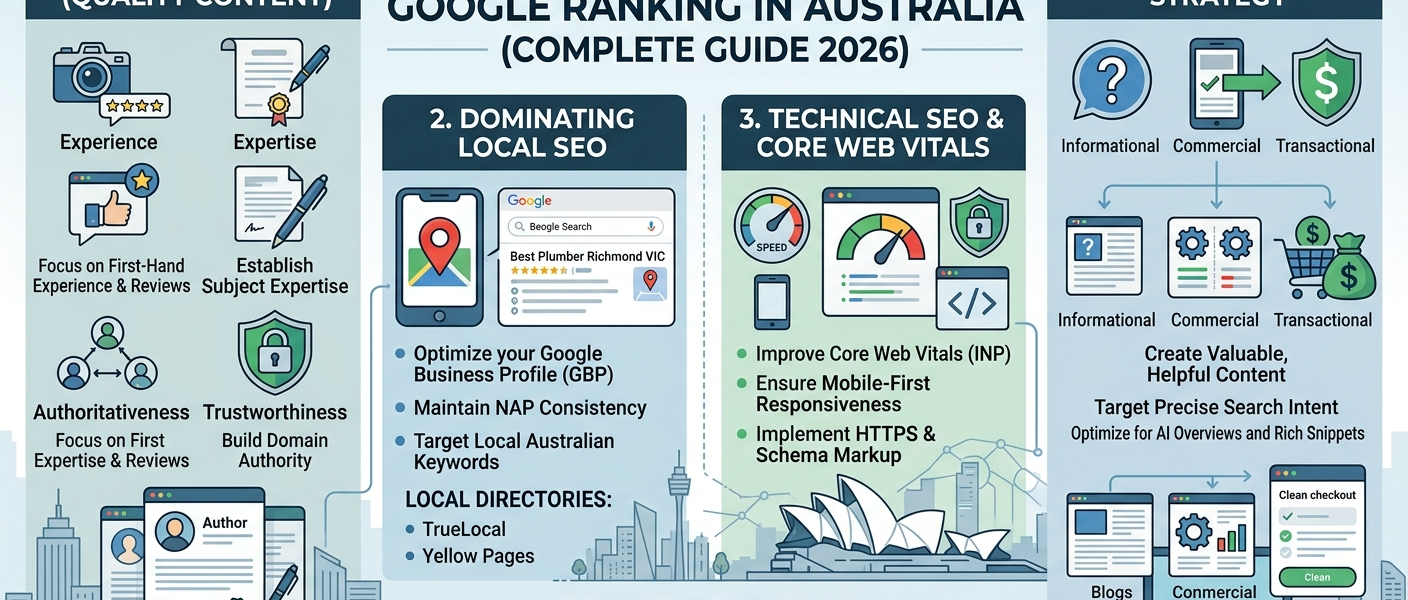
Key Highlights
- Google ranking is based on content, keywords, and structure
- You don’t need paid ads to rank
- Simple SEO strategies can bring long-term traffic
- Australia offers strong opportunities for beginners
- Consistency matters more than complexity
What Does “Ranking on Google” Mean?
In simple terms, ranking means your website appears when someone searches on Google.
For example:
If a user searches:
👉 “how to grow website traffic australia”
And your page appears on the first page, that means your site is ranking.
However, getting there requires a clear strategy. Google doesn’t randomly show websites. Instead, it selects content that is useful, relevant, and easy to understand.
How Google Decides Which Websites to Rank
Google uses multiple factors to decide rankings. However, you don’t need to overcomplicate it.
Here are the main ones:
1. Relevance to Search
Your content must match what people are searching.
2. Content Quality
Helpful and clear content performs better.
3. Website Structure
A well-organized site is easier to understand.
4. User Experience
If users stay longer, rankings improve.
5. Consistency
Regular updates signal activity and trust.
As a result, focusing on these basics can already put you ahead of many competitors.
Step-by-Step: How to Rank on Google in Australia
Step 1: Start With the Right Keywords
Keywords are the foundation of SEO.
However, not all keywords are equal.
Instead of targeting broad terms, focus on:
- how to rank website australia
- beginner seo guide australia
- google ranking tips australia
These are easier to rank.
In addition, they bring targeted traffic.
Step 2: Create Helpful Content
Once you have keywords, the next step is content.
Your content should:
- answer real questions
- solve problems
- be easy to read
For example, instead of writing complex articles, keep things simple.
As a result, users stay longer, which improves rankings.
Step 3: Structure Your Content Properly
Structure matters more than most people think.
Use:
- headings
- short paragraphs
- bullet points
This makes your content easier to read.
At the same time, it helps Google understand your page better.
Step 4: Optimize On-Page SEO
On-page SEO is simple but powerful.
Focus on:
- adding keywords in headings
- writing clear titles
- linking to other pages
For example, linking your blogs together improves navigation.
Because of this, users explore more pages.
Step 5: Improve User Experience
User experience plays a big role.
If your site is slow or confusing, users leave quickly.
To fix this:
- make your site mobile-friendly
- improve loading speed
- keep design clean
As a result, users stay longer, which boosts rankings.
Step 6: Stay Consistent
Consistency is often ignored.
However, it is one of the most important factors.
Publishing regularly helps:
- build authority
- increase visibility
- improve trust
Even one blog per week can make a difference.
What Is SEO? The Powerful Beginner’s Guide That Helps (Read More)
Why Google Ranking Is Easier in Australia
Australia offers unique advantages.
First, competition is lower than global markets.
Second, many businesses are not using SEO properly.
As a result, beginners can grow faster.
In addition, local searches are strong.
For example:
👉 “seo services melbourne”
👉 “digital marketing sydney”
These keywords bring highly targeted traffic.
High Intent + Low Competition Keywords Australia
To rank faster, focus on specific keywords.
Here are examples:
- how to rank on google australia beginner
- seo tips australia small business
- google ranking strategies australia 2026
- how to increase website traffic australia free
- simple seo guide australia
These keywords are easier to rank.
At the same time, they attract users who are actively searching.
How to Start Digital Marketing in Australia (Beginner Guide 2026) (Read More)
Common Mistakes That Stop You From Ranking
Mistake 1: Targeting Competitive Keywords
Many beginners go after broad keywords.
However, these are hard to rank.
Instead, start small.
Mistake 2: Writing Without Structure
Large blocks of text reduce readability.
As a result, users leave quickly.
Mistake 3: Inconsistent Publishing
Posting once and stopping doesn’t work.
SEO requires consistency.
Mistake 4: Ignoring User Experience
A slow or confusing site hurts rankings.
Therefore, always focus on usability.
How Long Does It Take to Rank on Google?
SEO takes time.
However, you can expect:
- 1–2 months → learning phase
- 3–4 months → initial traffic
- 6+ months → consistent growth
This depends on consistency and content quality.
Why Content Is the Most Important Factor
Content is the foundation of SEO.
Without content, there is nothing to rank.
Each article you publish increases your chances of appearing on Google.
In addition, content builds trust.
Over time, your website becomes a valuable resource.
How to Build Authority Over Time
Authority is built step by step.
You can build it by:
- publishing helpful content
- targeting the right keywords
- staying consistent
As a result, Google starts trusting your site more.
EEAT Expansion: Ranking Strategy for Beginners
Understanding Search Intent
Search intent means understanding what users want.
For example:
- “what is seo” → learning
- “seo services australia” → buying
Matching intent improves rankings.
Simple SEO Strategy That Works
You don’t need advanced tactics.
Focus on:
- keywords
- content
- structure
At the same time, keep things simple.
Why Simplicity Wins in SEO
Complex strategies often fail.
However, simple content performs better.
Because users understand it easily, engagement improves.
The Long-Term Benefits of Ranking on Google
Ranking on Google provides:
- free traffic
- consistent visitors
- higher trust
Unlike ads, results don’t stop.
Author Insight
Written by Hannah Johanson
Digital Marketing & SEO Strategist
From experience, beginners who focus on simple SEO strategies and stay consistent achieve better results over time.
Final Thought Before Decision
Ranking on Google is not about shortcuts.
Instead, it’s about doing simple things consistently.
If you focus on:
- helpful content
- clear structure
- regular updates
You can build strong results.
How to Find Low Competition Keywords in Australia (Step-by-Step)
Finding the right keywords can completely change your results.
In many cases, beginners fail not because of poor content, but because they target the wrong keywords. However, once you understand how to find low competition keywords in Australia, things become much easier.
First of all, start with simple searches on Google. Type a basic idea and look at suggestions. For example, when you search “how to rank website australia,” Google will show related searches.
In addition, scroll down to the bottom of the page. You’ll find more keyword ideas that people are already searching for.
Another simple method is to think like a user. Ask yourself:
👉 What would someone type if they needed help?
For instance:
- how to rank a small business website in australia
- how to get website traffic australia without ads
- beginner seo guide for australian websites
These keywords are longer, but they are easier to rank.
As a result, your chances of getting traffic increase significantly.
Why Long-Tail Keywords Are the Smartest Strategy
Long-tail keywords may look less popular at first. However, they are actually more powerful for beginners.
Instead of competing with large websites, you focus on specific searches.
For example:
❌ “SEO Australia”
✔ “how to do seo for small business in australia step by step”
The second keyword is more detailed. Therefore, fewer websites are targeting it.
At the same time, users searching for this keyword are more serious. Because of this, the traffic you get is more valuable.
How to Write Content That Matches Search Intent
Search intent is one of the most important parts of SEO.
In simple terms, it means understanding what the user wants.
For example:
- “what is seo” → user wants information
- “seo services australia price” → user wants to buy
If your content doesn’t match the intent, it won’t rank well.
Therefore, always ask:
👉 What is the user expecting from this search?
Once you understand that, structure your content around it.
Writing SEO Content That Feels Natural (Human Approach)
Many beginners try to “force” keywords into content.
However, this makes the article feel robotic.
Instead, focus on natural writing.
For example, instead of repeating the same keyword again and again, use variations:
- google ranking australia guide
- how to rank website in australia
- seo tips for australian websites
This improves readability.
At the same time, it keeps your content SEO-friendly.
How to Improve Readability Without Effort
Readability plays a big role in rankings.
If users enjoy reading your content, they stay longer. As a result, Google sees your page as helpful.
To improve readability:
- keep sentences short
- avoid complex words
- use subheadings regularly
- add transition words
For example:
Instead of writing long paragraphs, break them into smaller sections. This makes your content easier to scan.
The Importance of Transition Words in SEO Writing
Transition words improve the flow of your content.
They connect ideas and guide the reader.
For example:
- however
- therefore
- in addition
- as a result
- on the other hand
Using these words makes your writing smoother.
At the same time, it improves your SEO readability score.
How to Build Content Consistency (Even If You’re Busy)
Consistency doesn’t mean posting daily.
Instead, it means posting regularly.
For example:
- one blog per week
- two blogs per week
This is enough to grow.
In addition, creating a simple schedule helps you stay on track.
Over time, your content builds momentum.
Why Publishing More Content Increases Ranking Chances
Every blog you publish creates a new opportunity.
It’s like adding more doors to your website.
Each door brings visitors.
As a result:
- your traffic increases
- your authority grows
- your rankings improve
Even if one article doesn’t rank, another might.
How Internal Linking Improves Your SEO
Internal linking is often ignored.
However, it is very powerful.
When you link one blog to another, you:
- guide users
- improve navigation
- boost SEO
For example:
👉 blog about SEO → link to blog about traffic
This creates a connected structure.
Because of this, users stay longer on your site.
How to Optimize Your Website for Better Rankings
You don’t need technical knowledge.
Simple improvements can make a big difference.
For example:
- improve page speed
- use mobile-friendly design
- keep layout clean
In addition, avoid clutter.
A simple website performs better.
Why User Experience Is More Important Than Ever
Google focuses on users.
If users enjoy your content, your rankings improve.
Therefore, always think from the reader’s perspective.
Ask:
👉 Is this easy to read?
👉 Is this helpful?
If the answer is yes, you’re on the right track.
How to Stay Motivated When Results Are Slow
SEO takes time.
Sometimes, you may not see results immediately.
However, that’s normal.
Instead of focusing on results, focus on progress.
For example:
- writing your next blog
- improving your content
- learning new strategies
Over time, results follow.
The Long-Term Benefits of Ranking on Google
Ranking on Google is powerful.
Unlike ads, it doesn’t stop.
Once your content ranks:
- you get free traffic
- you build trust
- you grow consistently
This is why SEO is a long-term strategy.
How Beginners Can Compete Without Experience
Experience is built over time.
You don’t need it to start.
Instead:
- start writing
- test strategies
- learn from results
This is how real growth happens.
Building a Strong SEO Foundation in Australia
A strong foundation includes:
- targeting long-tail keywords
- creating helpful content
- staying consistent
These basics are enough to grow.
The Future of SEO in Australia (2026 and Beyond)
SEO will continue to grow.
More businesses will go online.
However, opportunities will still exist.
Those who start early will benefit the most.
Final Thought Before Decision
Ranking on Google is not about doing everything perfectly.
Instead, it’s about doing simple things consistently.
If you focus on:
- long-tail keywords
- easy-to-read content
- regular publishing
You can build strong results over time.
Final Verdict
Ranking on Google in Australia in 2026 is achievable for beginners who follow a simple and consistent SEO strategy. By focusing on keywords, content, and user experience, anyone can grow their website without relying on paid ads.
SEO FAQs
Can beginners rank on Google?
Yes, with the right strategy.
Do I need backlinks?
Not at the beginning.
Is SEO expensive?
No, it can be done for free.
How often should I post?
1–2 times per week is enough.
What is the best way to start?
Focus on keywords and content.

[…] Beginner’s Guide to Google Ranking in Australia (Complete Guide 2026) Read More […]