- Introduction Why Website Cost Matters in 2026
- Average Website Design Cost in Australia in 2026
- Key Factors That Influence Website Design Cost
- Freelancer vs Agency Pricing in Australia
- What You Are Actually Paying For in a Website
- Website Types and Pricing Models in Australia
- ROI Trends and Smart Budget Strategy
- Website ROI in Australia
- Hidden Costs in Website Development
- Website Design Trends in Australia 2026
- Website ROI in Australia Why It Matters More Than Cost
- Hidden Costs of Website Development in Australia
- Website Design Trends in Australia 2026
- Final Verdict What Should Businesses Invest in 2026
- Author Information
Introduction Why Website Cost Matters in 2026
In 2026, having a website is no longer something optional for businesses operating in Australia. It has become the central part of how companies build trust, attract customers, and generate revenue. Whether it is a small local business, a growing startup, or a large enterprise, the website acts as the first point of interaction between a business and its potential customers.
However, one of the most common questions businesses ask is how much a website actually costs in Australia in 2026. The answer is not simple because website pricing is not fixed. It depends on multiple factors such as the type of website, the complexity of design, the features required, and the level of expertise involved in building it.
In today’s digital environment, understanding website pricing is important because it helps businesses make informed decisions. Without this understanding, companies may either overspend on unnecessary features or underspend and end up with a poor-quality website that does not generate results.
Average Website Design Cost in Australia in 2026
The cost of website design in Australia varies significantly depending on the type of service provider and the complexity of the project. A basic website built by a freelancer may cost a few thousand dollars, while a fully custom enterprise-level website built by a professional agency can cost tens of thousands of dollars.
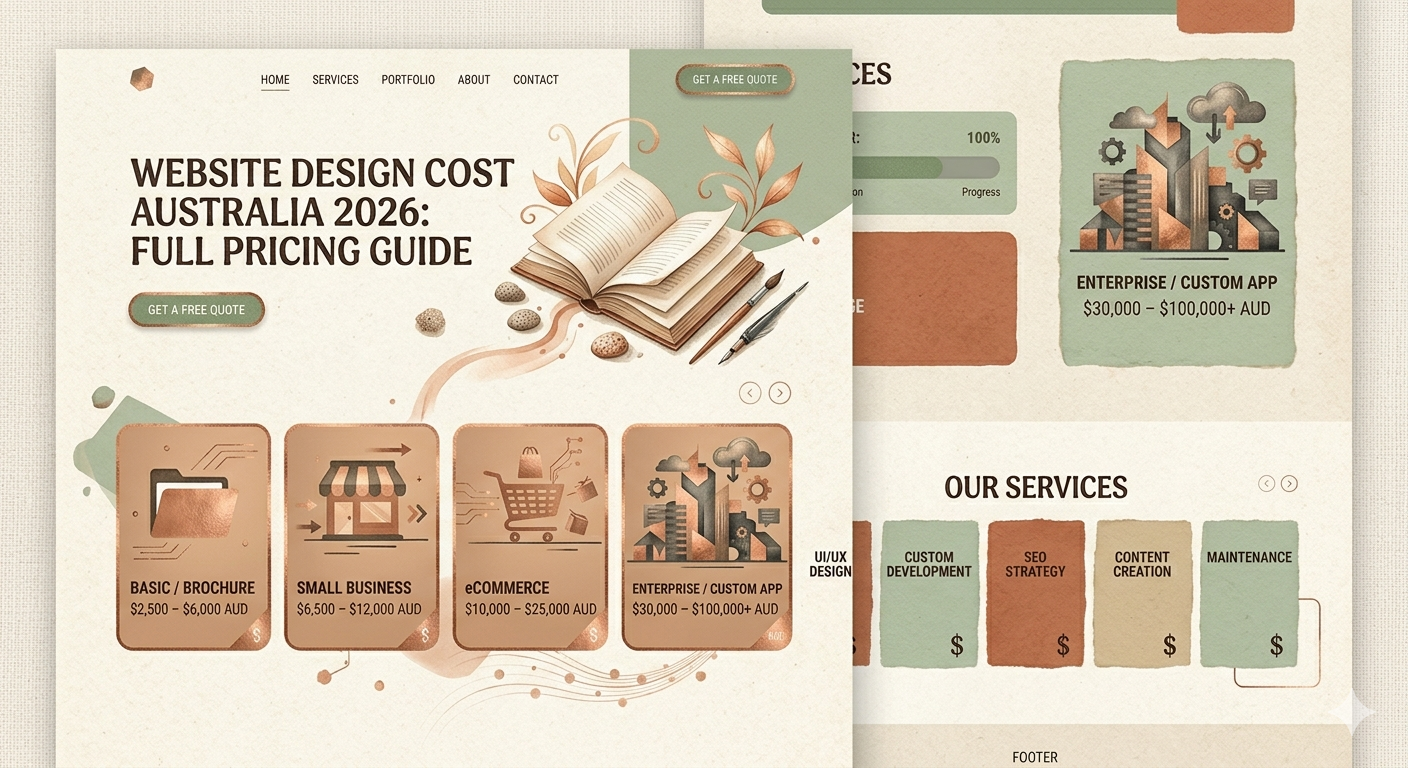
On average, a simple business website in Australia can cost between eight hundred and three thousand Australian dollars. A more professional small business website usually ranges between three thousand and eight thousand dollars. Custom designed websites that include advanced features such as booking systems, dashboards, or integrations can range from eight thousand to twenty thousand dollars or more. For large scale eCommerce platforms or enterprise level systems, the cost can go beyond twenty thousand dollars and may even reach one hundred thousand dollars depending on requirements.
The wide price range exists because websites are no longer just digital brochures. They are now complex systems that include design, development, performance optimization, user experience planning, security, and ongoing maintenance.
Key Factors That Influence Website Design Cost
Several important factors determine how much a website will cost in Australia. One of the most important factors is the type of website being built. A simple informational website will always cost less than an advanced eCommerce platform or a custom web application.
Another major factor is the design complexity. A website built using a pre designed template will cost significantly less compared to a fully custom designed website that requires unique layouts, animations, and user experiences. Custom design work requires more time, creativity, and technical expertise which increases the overall cost.
The number of pages also plays an important role in determining price. A small website with five pages will naturally cost less than a large website with twenty or more pages that require detailed content and design work.
Functionality is another key factor. Websites that require advanced features such as payment gateways, booking systems, customer dashboards, or third party integrations will cost more due to the additional development work involved.
Finally, the choice of developer or agency also affects pricing. Freelancers usually charge lower rates but may offer limited services, while agencies provide complete solutions including design strategy, development, SEO, and ongoing support, which increases the cost.
Freelancer vs Agency Pricing in Australia
When it comes to building a website in Australia, businesses generally choose between hiring a freelancer or working with a professional agency. Each option comes with different pricing structures and advantages.
Freelancers are typically more affordable and can build basic to moderately complex websites. Their pricing usually ranges from eight hundred to five thousand dollars depending on experience and project size. Freelancers are a good option for small businesses or startups that need a simple online presence without complex features.
On the other hand, agencies charge higher rates but provide a more complete and structured service. Small agencies in Australia usually charge between three thousand and fifteen thousand dollars. Premium agencies that work with established brands can charge anywhere from ten thousand to fifty thousand dollars or more.
The main difference is that agencies offer a team-based approach that includes designers, developers, SEO specialists, and project managers. This ensures better quality control, scalability, and long term support.
What You Are Actually Paying For in a Website
Many business owners assume that website design is only about visual appearance, but in reality, it includes multiple layers of work that contribute to the final product.
When you pay for a website, you are not only paying for design but also for user experience planning, frontend development, backend development, mobile responsiveness, hosting setup, domain configuration, security implementation, and sometimes even search engine optimization.
Design involves creating the visual structure of the website including layout, colors, typography, and branding elements. Development involves coding the website so that it functions properly across different devices and browsers.
Additionally, modern websites require performance optimization to ensure fast loading speed, which is critical for both user experience and search engine rankings. Security setup is also essential to protect the website from cyber threats and data breaches.
Website Types and Pricing Models in Australia
Basic Business Website Cost
A basic business website is typically designed for small local businesses that need an online presence. This includes services like cafes, local shops, consultants, or freelancers.
The cost for this type of website in Australia generally ranges from eight hundred to three thousand dollars. These websites usually include a few essential pages such as home, about, services, and contact pages.
Although these websites are simple, they are designed to be mobile friendly and provide basic information to potential customers. However, they may not include advanced features or complex functionality.
Small Business Website Cost
Small business websites are more advanced and are designed for companies that want to establish a stronger digital presence. These websites typically include custom design elements, service pages, blog sections, and basic SEO optimization.
The average cost for a small business website in Australia ranges between three thousand and eight thousand dollars. These websites are more structured and are built with scalability in mind, allowing businesses to expand their online presence over time.
eCommerce Website Cost in Australia
eCommerce websites are significantly more complex because they involve product listings, payment systems, inventory management, and customer accounts.
In Australia, the cost of building an eCommerce website can range from five thousand to thirty thousand dollars or more depending on the platform and complexity.
Platforms such as Shopify and WooCommerce are commonly used, but custom eCommerce solutions can cost significantly more due to advanced features and integrations.
Custom Website Development Cost
Custom websites are designed for businesses that require unique functionality that cannot be achieved through standard templates or platforms.
These websites often include custom dashboards, SaaS platforms, booking systems, or complex user interactions. The cost for custom development in Australia typically starts from ten thousand dollars and can go beyond fifty thousand dollars depending on complexity.
Enterprise Website Cost
Enterprise websites are large scale systems built for corporations and established brands. These websites require advanced architecture, high security standards, and integration with multiple systems.
The cost for enterprise websites in Australia can range from twenty thousand dollars to over one hundred thousand dollars depending on requirements.
ROI Trends and Smart Budget Strategy
Website ROI in Australia
A well designed website is not just an expense but a long term investment. Businesses that invest in high quality websites often experience better customer engagement, higher conversion rates, and increased revenue.
For example, a business that invests five thousand dollars in a properly optimized website can generate significantly higher returns through leads and sales over time.
Hidden Costs in Website Development
Many businesses fail to consider ongoing costs such as domain renewal, hosting fees, maintenance, updates, security patches, and SEO improvements. These costs are essential for keeping the website functional and competitive.
Website Design Trends in Australia 2026
Modern websites are becoming more advanced with features such as AI integration, personalized user experiences, faster loading speeds, and mobile first design approaches. Businesses in Australia are increasingly focusing on user experience and conversion optimization rather than just visual design.
Website ROI in Australia Why It Matters More Than Cost
In 2026, businesses in Australia are no longer evaluating websites only based on how much they cost. Instead, the focus has shifted toward what kind of return the website can generate over time. A website is now seen as a long-term digital asset rather than a one-time expense.
A well-designed website can significantly improve business performance by increasing customer trust, improving conversion rates, and generating consistent leads or sales. In many cases, businesses that invest properly in their website see returns that far exceed the initial cost.
For example, a small business investing around five thousand Australian dollars into a well-optimized website can generate multiple times that value in annual revenue through organic traffic, search visibility, and improved customer engagement.
The return on investment depends heavily on how well the website is designed and optimized. A poorly built website may not generate any meaningful results, while a strategically developed website can become the most powerful marketing tool for a business.
Key factors that influence website ROI include user experience quality, loading speed, mobile responsiveness, content quality, and search engine optimization. Businesses that prioritize these areas are more likely to see higher long-term returns.
Hidden Costs of Website Development in Australia
Many businesses in Australia focus only on the initial cost of building a website, but they often overlook the hidden and ongoing costs that come after launch. These additional costs are an important part of maintaining a successful online presence.
One of the most common ongoing costs is website hosting. Every website needs a server to remain live on the internet, and hosting fees vary depending on performance and security requirements.
Another recurring cost is domain renewal. A website domain must be renewed annually to maintain ownership and accessibility.
Maintenance is another critical factor. Websites require regular updates to ensure security, fix bugs, and improve performance. Without maintenance, websites can become slow, outdated, or vulnerable to security threats.
Search engine optimization is also an ongoing investment. In competitive markets like Australia, businesses need continuous SEO efforts to maintain or improve their Google rankings.
In addition, some websites require third-party tools such as email marketing systems, analytics platforms, booking systems, or payment gateways. These tools often come with monthly or yearly subscription costs.
Understanding these hidden costs is important because they directly affect the long-term budget required to maintain a professional website.
Website Design Trends in Australia 2026
Website design in Australia is evolving rapidly in 2026, driven by changes in user behavior, technology advancements, and search engine algorithms. Modern websites are no longer just visually appealing pages; they are now interactive, intelligent, and highly optimized systems designed to improve user experience and conversions.
One of the most important trends is the rise of mobile-first design. Since most users access websites through mobile devices, businesses are prioritizing mobile optimization over desktop design.
Another major trend is the use of artificial intelligence in web design. AI tools are now being used to improve layout suggestions, personalize user experiences, and even automate parts of content creation and design optimization.
Minimalist design is also becoming more popular. Clean layouts with simple navigation and fast loading times are preferred because they improve user engagement and reduce bounce rates.
Speed optimization has become a critical ranking factor. Websites that load quickly are more likely to rank higher on search engines and retain visitors for longer periods.
Personalization is another growing trend. Websites are increasingly designed to adapt content based on user behavior, location, and preferences, creating a more engaging experience for visitors.
Overall, these trends show that website design in Australia is becoming more focused on performance, intelligence, and user experience rather than just visual appearance.
Final Verdict What Should Businesses Invest in 2026
After analyzing website types, pricing structures, hidden costs, and industry trends, it is clear that website design in Australia in 2026 is a strategic investment rather than a simple expense.
The cost of building a website depends entirely on the business goals and level of complexity required. Small businesses may only need a simple website to establish their presence, while growing companies require more advanced systems to generate leads and sales. Large enterprises need fully custom platforms that can handle complex operations and high traffic volumes.
The key takeaway is that there is no single correct price for a website. Instead, businesses must focus on value, functionality, and long-term return on investment. A properly designed website can become the most powerful tool for business growth, while a poorly designed website can limit potential and reduce credibility.
In 2026, the smartest approach is not to choose the cheapest option but to choose the most strategic one that aligns with business goals.
Author Information
This article is written by Hannah Smith, a digital marketing and web strategy specialist with over ten years of experience in SEO, website development strategy, and conversion optimization. Hannah has worked with businesses across Australia, Ireland, and global markets, helping them improve online visibility, user experience, and digital performance.
Her focus is on creating practical, data-driven insights that help businesses make informed decisions about their digital investments and long-term growth strategies.

Leave a Reply