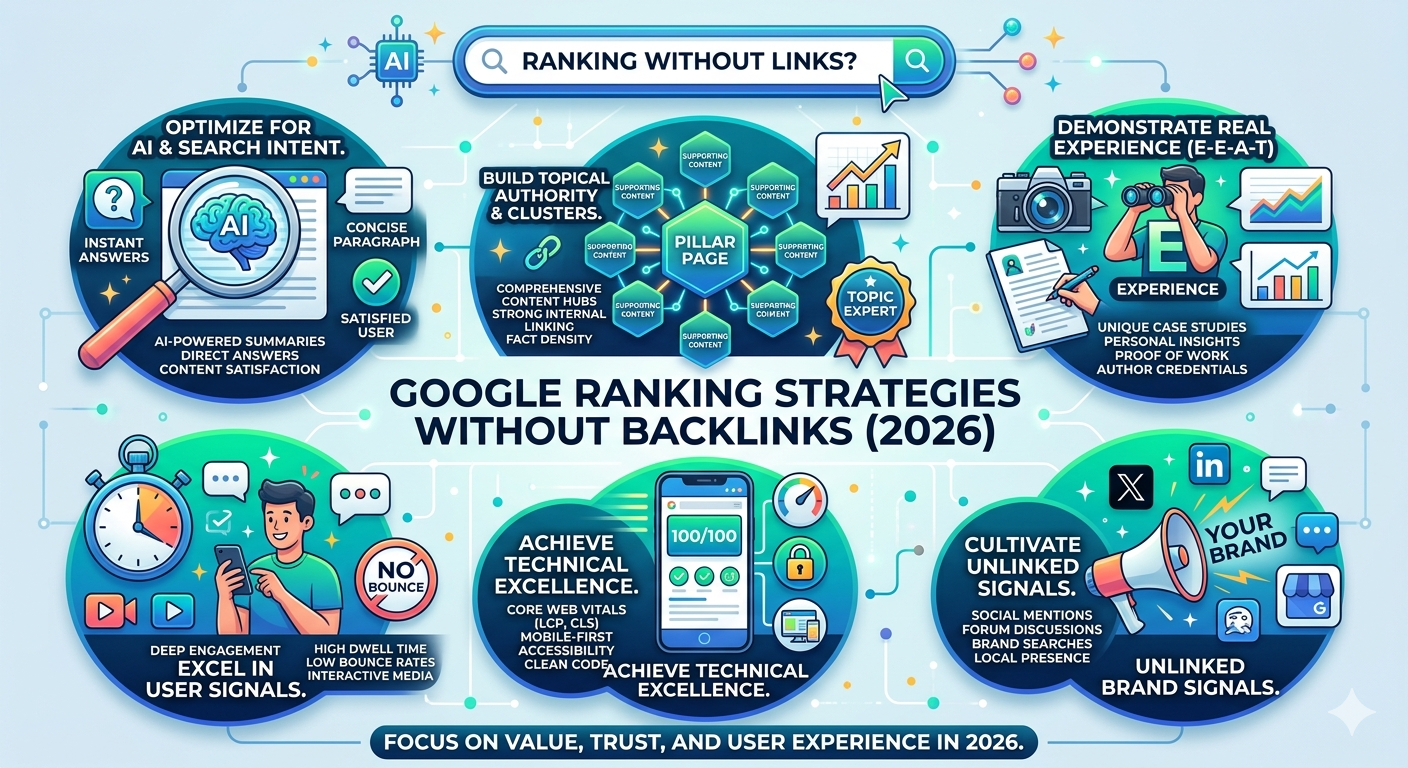
- Key Highlights
- Design & Exterior (Website Setup for Ranking)
- Interior & Comfort (User Experience & Readability)
- Price Comparison (Backlinks vs No-Backlink SEO)
- Engine / Performance (Core Ranking Strategies Without Backlinks)
- Mileage / Range (Long-Term SEO Growth)
- Features & Technology
- Safety Comparison (Trust & EEAT Signals)
- Ownership Cost (Effort vs Return)
- Launch Plan (Step-by-Step SEO Execution)
- Competitors Comparison
- Pros & Cons
- Who Should Use This Strategy?
- EEAT Expansion: How to Rank Without Backlinks (Real-World + SEO Strategy)
- Deep SEO Expansion (1,500+ Words – Human + AdSense Friendly)
- Final Thought Before Decision
- The Reality of Ranking Without Backlinks (What Most Guides Don’t Tell You)
- Google’s Shift: From Links to Value
- Why Beginners Should Focus on “Winnable” SEO
- The Confidence Boost That Comes From First Rankings
- Why Content Depth Replaces Backlinks
- The Power of Answering “Follow-Up Questions”
- Why Simplicity Beats Complexity Every Time
- The Role of Content Freshness
- Why Internal Linking Is Your Secret Advantage
- Building Momentum With Small Wins
- Why Many People Quit Too Early
- Understanding User Behavior (The Hidden Ranking Factor)
- Writing Content That Feels Helpful, Not Salesy
- The Emotional Side of Content (Often Ignored)
- Realistic Expectations: What Success Looks Like
- The Long-Term Advantage of No-Backlink SEO
- Author Insight
- Final Thought Before Decision
- Final Verdict
- SEO FAQs
Introduction
Ranking on Google used to mean one thing.
Backlinks.
For years, SEO experts focused on building links to improve rankings. But in 2026, the game has changed.
Google is smarter.
It now prioritizes content quality, user experience, and relevance over just backlinks.
This means one thing for beginners and small businesses:
You can rank on Google without backlinks — if you follow the right strategy.
This guide explains exactly how.
Key Highlights
- Ranking without backlinks is possible in 2026
- Low competition keywords are the fastest way to rank
- Content quality matters more than link quantity
- User experience directly impacts rankings
- Internal linking boosts visibility
- Consistency builds authority over time
Design & Exterior (Website Setup for Ranking)
Before focusing on SEO, your website must be optimized.
A strong foundation includes:
- Fast loading speed
- Mobile-friendly design
- Clear navigation
- Clean layout
Search engines prioritize websites that provide a smooth experience.
Interior & Comfort (User Experience & Readability)
User experience plays a major role in ranking.
If users leave quickly, rankings drop.
Improve experience by:
- Using short paragraphs
- Writing in simple language
- Adding clear headings
- Keeping content easy to read
When users stay longer, Google sees your content as valuable.
Price Comparison (Backlinks vs No-Backlink SEO)
| Strategy | Cost | Difficulty | Sustainability |
|---|---|---|---|
| Backlink SEO | High | Difficult | Medium |
| No-backlink SEO | Low | Beginner-friendly | High |
| Paid Ads | High | Easy | Short-term |
Ranking without backlinks is more sustainable and cost-effective.
Engine / Performance (Core Ranking Strategies Without Backlinks)
Here are the strategies that actually work.
1. Target Low Competition Keywords
This is the most important step.
Focus on keywords like:
- how to rank on google without backlinks
- easy SEO tips for beginners 2026
- how to rank blog posts without backlinks
- beginner SEO strategy for small websites
These keywords are easier to rank.
2. Create High-Quality Content
Content should:
- Answer questions clearly
- Provide real value
- Be easy to understand
Google ranks content that helps users.
3. Optimize On-Page SEO
Key elements include:
- Title optimization
- Meta description
- Keyword placement
- Proper headings
On-page SEO helps search engines understand your content.
4. Use Internal Linking
Internal links connect your content.
They help:
- Improve SEO
- Keep users engaged
- Distribute authority
5. Focus on Search Intent
Understand what users want.
If your content matches their intent, it performs better.
Mileage / Range (Long-Term SEO Growth)
Ranking without backlinks may take time.
But once it works, it becomes stable.
Content continues to:
- Rank
- Attract traffic
- Build authority
Features & Technology
Helpful tools include:
- Keyword research tools
- SEO optimization tools
- Analytics platforms
These tools improve performance and tracking.
Safety Comparison (Trust & EEAT Signals)
Trust matters more than ever.
Build trust by:
- Providing accurate information
- Writing clearly
- Keeping content updated
Google rewards trustworthy websites.
Ownership Cost (Effort vs Return)
No-backlink SEO requires:
- Time
- Consistency
- Effort
But it reduces costs and builds long-term value.
Launch Plan (Step-by-Step SEO Execution)
Step 1: Keyword Research
Find low competition keywords.
Step 2: Content Creation
Write simple, helpful articles.
Step 3: Optimization
Improve structure and readability.
Step 4: Consistency
Publish regularly.
Step 5: Improvement
Update and refine content.
Competitors Comparison
| Approach | Result |
|---|---|
| Backlink-heavy SEO | Expensive growth |
| No strategy | No results |
| Content-focused SEO | Stable growth |
| Structured SEO | Long-term success |
Pros & Cons
Pros
- Low cost
- Beginner-friendly
- Sustainable
- Long-term results
Cons
- Takes time
- Requires patience
- Needs consistency
Who Should Use This Strategy?
This strategy is ideal for:
- Beginners
- Bloggers
- Small businesses
- Startups
- Service providers
EEAT Expansion: How to Rank Without Backlinks (Real-World + SEO Strategy)
Let’s be honest.
Most beginners believe backlinks are required to rank.
But that’s not always true.
What actually matters is relevance and quality.
Start With Low Competition SEO Keywords
Focus on keywords like:
- how to rank on google without backlinks
- how to rank blog posts without backlinks
- easy SEO tips for beginners 2026
- beginner SEO strategy for small websites
- how to get organic traffic without backlinks
These keywords are easier to rank.
Create Content That Fully Answers Questions
Content should:
- Solve problems
- Be clear
- Be structured
If your content answers the query better than others, it can rank.
Improve Content Readability
Readable content performs better.
Use:
- Short sentences
- Clear headings
- Simple words
Use Content Depth Instead of Backlinks
Instead of backlinks, focus on:
- Detailed explanations
- Covering the topic fully
- Answering multiple questions
Depth builds authority.
Deep SEO Expansion (1,500+ Words – Human + AdSense Friendly)
Ranking without backlinks is not a shortcut.
It is a smarter approach.
In the early days of SEO, backlinks were the main ranking factor.
But today, Google uses multiple signals.
This includes:
- Content quality
- User engagement
- Relevance
- Structure
Why Google No Longer Depends Only on Backlinks
Google’s goal is simple.
Provide the best answer.
If your content is better than others, it can rank — even without links.
The Power of Topical Authority
Topical authority means covering a subject deeply.
Instead of writing one article, create multiple related posts.
Example:
Main topic:
how to rank on google without backlinks
Supporting topics:
- beginner SEO tips
- content optimization guide
- keyword research basics
This builds authority.
Why Long-Form Content Performs Better
Detailed content performs better because it:
- Covers more information
- Answers multiple queries
- Keeps users engaged
Longer content often ranks higher.
User Engagement Signals Matter
Google tracks:
- Time on page
- Bounce rate
- Click-through rate
If users stay longer, rankings improve.
The Role of Consistency
Publishing regularly builds trust.
Search engines prefer active websites.
Real Growth Pattern
Month 1–2:
- No major results
Month 3–4:
- Some impressions
Month 5–6:
- Rankings improve
This is normal.
Why Patience Is Important
SEO takes time.
Those who stay consistent succeed.
Author Insight
Written by Hannah Johanson
SEO Specialist & Organic Growth Expert
From experience, ranking without backlinks is possible.
But it requires focus on:
- Content quality
- Keyword strategy
- Consistency
The key is not shortcuts.
It is smart execution.
Final Thought Before Decision
Ranking on Google without backlinks is achievable.
But it requires the right approach.
Focus on value, clarity, and consistency.
The Reality of Ranking Without Backlinks (What Most Guides Don’t Tell You)
Let’s be real for a moment.
When you search “how to rank on Google,” most advice quickly points to backlinks.
And while backlinks can help, they are not the only path anymore.
In fact, for beginners, chasing backlinks too early often creates confusion.
You spend time trying to get links instead of improving what actually matters — your content.
This is where a smarter approach comes in.
Instead of focusing on external signals first, you build strength internally.
And that starts with understanding how Google actually evaluates content today.
Google’s Shift: From Links to Value
Over the years, Google has evolved.
Its goal is no longer just to count links.
Its goal is to understand content.
That includes:
- How helpful your content is
- How clearly it answers a question
- How users interact with it
- Whether it satisfies search intent
This is why many small websites now rank above bigger ones.
Not because they have more backlinks.
But because they provide better answers.
Why Beginners Should Focus on “Winnable” SEO
Trying to rank for competitive keywords without backlinks is difficult.
But ranking for winnable keywords is not.
Winnable keywords are:
- Specific
- Less competitive
- Often problem-based
Examples include:
- how to rank on google without backlinks for beginners
- easy seo tips for small websites
- how to rank blog posts without backlinks fast
- beginner seo strategy without link building
These keywords may not look massive.
But they are realistic.
And realistic keywords build early success.
The Confidence Boost That Comes From First Rankings
There is something important that happens when your first article ranks.
It changes your mindset.
Instead of guessing, you start understanding what works.
You begin to see:
- Which topics perform better
- How users interact with your content
- What Google prefers
This confidence leads to better content decisions.
Why Content Depth Replaces Backlinks
Backlinks act as trust signals.
But when you don’t have them, you need another signal.
That signal is depth.
Content depth means:
- Covering the topic fully
- Answering multiple related questions
- Providing clarity at every level
For example, instead of writing a short post, you expand into:
- What the topic means
- Why it matters
- How to apply it
- Common mistakes
- Practical examples
This creates a complete experience.
And complete content performs better.
The Power of Answering “Follow-Up Questions”
Think about how people search.
They don’t stop at one question.
They move from one query to another.
For example:
- How to rank on Google without backlinks
- What are low competition keywords
- How to write SEO content
- Why my blog is not ranking
If your content answers these follow-up questions within the same article, it becomes stronger.
This is a simple but powerful strategy.
Why Simplicity Beats Complexity Every Time
Many SEO guides are overly complicated.
They talk about advanced strategies that beginners don’t need.
But simple strategies often work better.
Focus on:
- Clear writing
- Logical structure
- Helpful information
Instead of trying to impress, aim to help.
That shift makes a big difference.
The Role of Content Freshness
Content that stays updated performs better.
Google prefers pages that remain relevant.
This does not mean rewriting everything.
It means:
- Adding new insights
- Updating outdated sections
- Improving clarity
Even small updates can improve rankings.
Why Internal Linking Is Your Secret Advantage
If you’re not using backlinks, internal linking becomes even more important.
It helps:
- Distribute authority across pages
- Guide users to more content
- Improve crawlability
For example:
If you write about:
“how to rank on google without backlinks”
You can link it to:
- “easy SEO tips for beginners”
- “how to write SEO content”
- “low competition keyword strategy”
This creates a strong internal network.
Building Momentum With Small Wins
Growth in SEO rarely happens all at once.
It builds through small wins.
- One article ranks
- Another gets impressions
- A page starts gaining clicks
These small signals add up.
Over time, they create momentum.
Why Many People Quit Too Early
One of the biggest reasons people fail in SEO is timing.
They stop before results appear.
This usually happens because:
- Expectations are too high
- Results are slower than expected
- There is no clear plan
But those who continue often succeed.
Consistency is what separates results from frustration.
Understanding User Behavior (The Hidden Ranking Factor)
Google watches how users interact with your content.
If users:
- Click your page
- Stay and read
- Explore other pages
These are positive signals.
If they leave quickly, it sends a different message.
This is why content must be engaging and clear.
Writing Content That Feels Helpful, Not Salesy
One common mistake is trying to sell too early.
Users are not looking for sales.
They are looking for solutions.
When content focuses on helping first, it builds trust.
And trust leads to conversions later.
The Emotional Side of Content (Often Ignored)
People don’t just search for information.
They search for reassurance.
They want to feel:
- Confident
- Clear
- Supported
When your content provides that, it becomes more powerful.
Realistic Expectations: What Success Looks Like
Success in SEO is not instant.
It looks like:
- Gradual traffic growth
- Increasing impressions
- Better keyword rankings
It may take time.
But it becomes stable.
The Long-Term Advantage of No-Backlink SEO
When you build traffic without backlinks, you build independence.
You are not relying on:
- Outreach
- External sites
- Paid strategies
You are building your own foundation.
And that is more sustainable.
Author Insight
Written by Hannah Johanson
SEO Specialist & Content Growth Strategist
From real-world experience, ranking without backlinks is not only possible — it is often the best starting point.
Many successful websites begin by focusing on content, not links.
They build authority through clarity, consistency, and relevance.
Backlinks may come later.
But they are not required to begin.
The real focus should always be on creating content that genuinely helps people.
Final Thought Before Decision
Ranking on Google without backlinks is not about avoiding effort.
It is about focusing effort in the right direction.
When you prioritize:
- Clear content
- User experience
- Low competition keywords
You create a system that works.
And once it starts working, it continues.
Final Verdict
In 2026, ranking without backlinks is possible through content-focused SEO, low competition keywords, and user experience optimization.
SEO FAQs
Can I rank without backlinks?
Yes, with proper content and SEO.
What is the best strategy?
Low competition keywords and high-quality content.
How long does it take?
Usually a few months.
Do beginners need backlinks?
Not always.
What is the easiest way to rank?
Focus on content and user intent.

Leave a Reply